
The box has been in the hallway for four months, hasn't it. New tap, new toilet; bought with the best intentions, still sitting where you put it down. Usually because nobody is sure it will fit, or because everyone suspects a "quick swap" ends with the water off and a wet kitchen. The fixture is almost never the problem. It is the shut-off valve underneath that has not moved in twenty years, and whether the new one matches the old holes. Send us a photo before you buy and we will tell you what fits, before you spend anything. Talk to a licensed plumber now, fixed written price before any work starts.
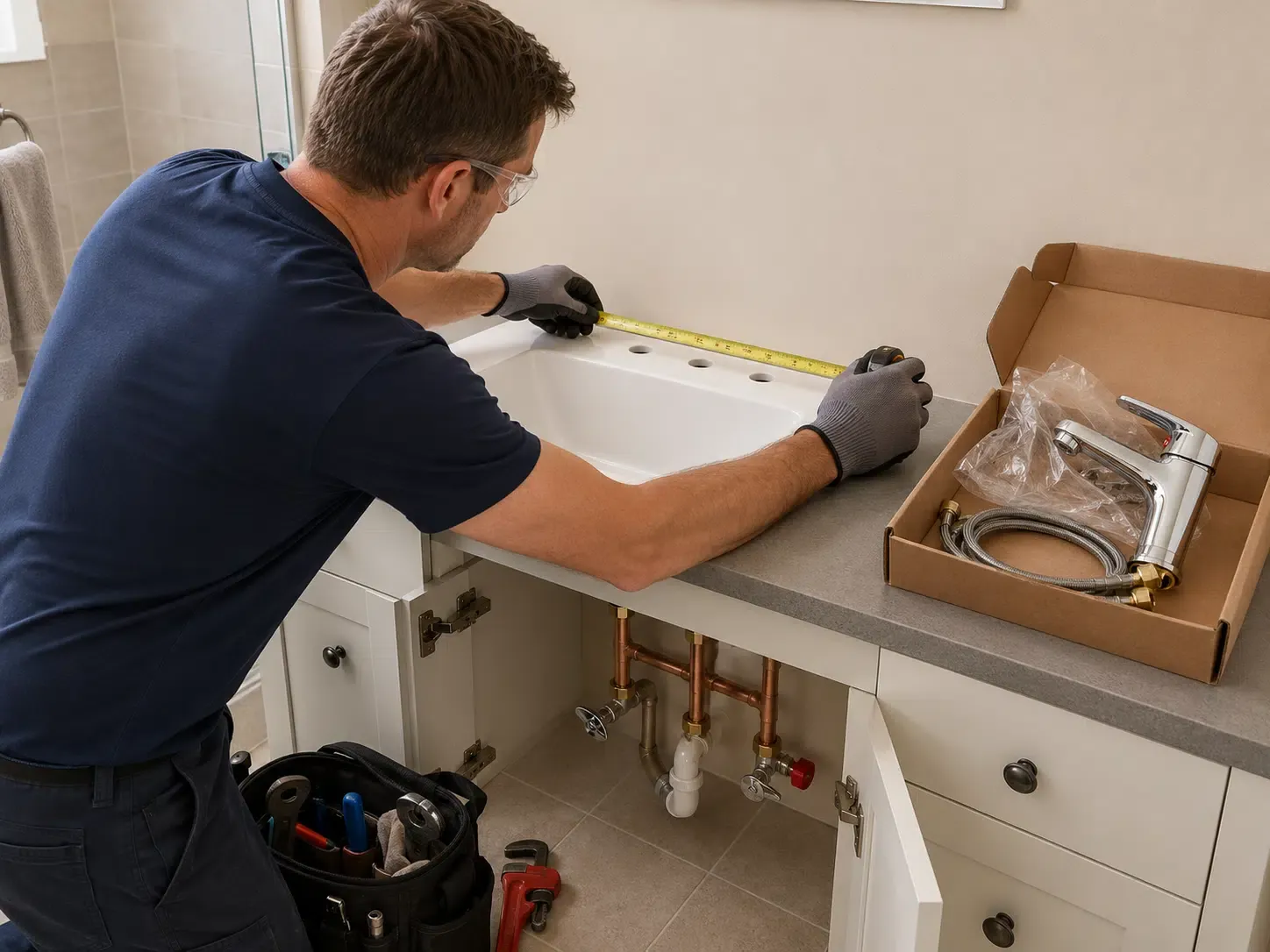
New tap sitting in its box waiting for someone to fit it? Or a toilet you have been meaning to replace for two years? Take a breath, this is one of the more straightforward things we do. But there are two things worth checking before you buy anything or book anyone, because between them they cause almost every fixture job that goes sideways. They take 5 minutes and a tape measure.
Measure before you buy, five minutes now saves a return trip
- Toilet: measure the rough-in. From the finished wall behind the toilet to the centre of the bolts holding the pan down. 12 inches is standard, but ten and fourteen exist, and a lot of older Vancouver houses have one of those. A toilet bought for the wrong rough-in will not fit, and no amount of plumbing makes it fit.
- Bathroom tap: count the holes in the basin. One hole takes a single-lever mixer. Three holes at four inches apart takes a centreset. Three holes at eight inches or more takes a widespread. Buying a widespread for a single-hole basin is the commonest fixture mistake there is.
- Kitchen tap: count the holes too, and check for a sprayer or soap dispenser. If you drop from four holes to one, you need a deck plate to cover the rest, and it has to match the finish.
- Sink: measure the cabinet, not the old sink. A deeper bowl can leave no room for the trap, and the trap arm has to keep its fall to the wall.
- Everything: turn the shutoff valve under the fixture. Just turn it, gently, and turn it back. If it will not move, or it weeps when you move it, tell us when you book. That single check is the subject of the next section, and it is the one that changes the price.
Send us a photo of the basin holes or the toilet rough-in when you book and we will tell you before you buy whether what you are looking at will fit.
Fixture installation covers replacing or fitting taps, toilets, sinks, shower valves and heads, tubs, bidets, laundry tubs and outdoor hose bibs. The fixture swap itself is usually quick. What decides how long the job takes and what it costs is almost never the fixture, it is the condition of the shutoff valve and the supply lines behind it, whether the new fixture matches the existing openings, and whether anything has to be cut or adapted to make it fit.
The Shutoff Valve; Why a Simple Swap Sometimes Is Not One
This is the single most common surprise on fixture work, and almost no plumbing website mentions it before the visit. So here it is up front.
Every tap and toilet has a small shutoff valve underneath it; an angle stop, that isolates that fixture so the water can be turned off there rather than for the whole house. In a house of any age those valves often have not been touched in twenty years. Three things go wrong with them.
- It will not turn at all. The stem has seized. Forcing it is how a straightforward job becomes a wet one.
- It turns but does not fully close. The washer has perished, so it keeps weeping. You cannot fit a new tap onto a supply that will not stop.
- It closes, but starts weeping afterwards because being moved for the first time in two decades disturbed a seal that was holding by habit.
When any of those happens, the valve has to be replaced before the fixture can go on; and depending on how the supply is plumbed, that may mean isolating a larger section of the house to do it. That is why a “quick tap swap” occasionally turns into a longer visit, and it is why we ask about the valve when you book rather than discovering it with the water off and your kitchen out of action.
What you can check yourself, right now
Reach under the sink or behind the toilet, find the small oval or football-shaped handle, and turn it gently clockwise. It should move without force and stop. Turn it back. If it will not move, feels gritty, or leaves your fingers wet, note it and tell us when you book. We will bring valves and quote it in with the fixture rather than surprising you on the day.
If you have a house built before about 1980 and the valves have never been replaced, assume at least one of them will need doing. Budgeting for that in advance is much less annoying than being told about it halfway through.
What We Install
| Fixture | What the job usually involves |
| Kitchen and bathroom taps | Remove old unit, check and replace supply lines, fit new mixer, test for leaks under pressure. Deck plate if the hole count changes |
| Toilets | Remove and dispose of the old pan, replace the wax or foam seal and closet bolts, set and level the new pan, connect and test the fill and flush |
| Sinks and basins | Fit or refit the sink, connect waste and trap, reseal to the counter, confirm the trap arm keeps its fall |
| Shower valves and heads | Head and arm swaps are quick. A valve change is a bigger job; it usually means access from behind or through the tile face |
| Tubs and tub fillers | Depends heavily on access and on what is behind the wall. Usually quoted after a look |
| Bidets and bidet seats | Needs a water connection at the pan and, for heated seats, a power outlet within reach |
| Laundry tubs and taps | Tub, taps, trap and standpipe connection |
| Outdoor hose bibs | Replacement and frost-safe upgrades; worth doing before winter, not after a split |
| Shutoff valves and supply lines | Often the reason we are there at all; see the section above |
Appliances that connect to water or gas, dishwashers, washing machines, fridge water lines, gas ranges are a separate service and have their own page. Garburators do too.
Will the Fixture You Bought Be Allowed?
Worth knowing before you buy online, particularly from a US retailer. The City of Vancouver sets maximum water use for fixtures, and a unit rated above those limits is not compliant here.
As published by the City of Vancouver in its water efficiency requirements, updated 19 September 2025:
| Fixture | Maximum |
| Toilet | 4.8 L per flush; and the full flush on a dual-flush unit must not exceed 4.8 L |
| Showerhead | 7.6 L per minute |
| Bathroom (lavatory) tap, private use | 5.7 L per minute |
| Bathroom tap, public use | 1.9 L per minute |
| Kitchen tap, residential | 6.8 L per minute |
| Kitchen tap, non-residential | 8.3 L per minute |
| Urinal | 1.9 L per flush |
Most fixtures sold in Canada meet these comfortably. The ones that catch people out are high-flow rain heads and multi-outlet shower systems bought abroad, and older stock. The City notes that this summary does not cover every applicable Vancouver Building By-law requirement, so if you are planning something unusual, confirm it with the City before ordering.
Requirements in North Vancouver, West Vancouver, Burnaby and Coquitlam are set by their own bylaws. Tell us what you are planning and we will flag anything that looks like a problem before it arrives in a box.
Fixtures You Bought Yourself
Yes, we install them. A lot of people choose their own taps and toilets and there is no reason not to.
Two things worth knowing. First, we will tell you before we start if what you have bought will not fit wrong rough-in, wrong hole spacing, wrong size for the cabinet rather than discovering it with your old fixture already off. That is what the measuring section at the top of this page is for.
Second, the workmanship warranty covers our installation. The fixture itself is covered by its own manufacturer warranty, which you claim through the retailer. If a cartridge fails in a budget mixer after eight months, that is a manufacturer matter, and we will tell you honestly whether the unit you are considering is likely to be a false economy.
We can also supply the fixture if you would rather not choose. Either way, you get one written price before anything starts.
What Fixture Installation Costs and Why Nobody Publishes a Number
Every plumbing website in Vancouver answers this question with “free estimate”, including the ones that write a thousand words about pricing. Here is the actual reason, which is more useful than a number.
The fixture swap itself is not the variable. Fitting a tap onto sound valves with matching holes is quick and predictable. What is variable is everything around it and it is not visible until someone is under the sink with a torch.
What actually decides the price
- The condition of the shutoff valves. The single biggest factor. Sound valves, quick job. Seized or weeping valves, a bigger one.
- Whether the new fixture matches the existing openings. A like-for-like swap is quick. A change in hole count, rough-in or sink size is not.
- A deep cabinet with a waste disposal and a water filter already under it is slower than an empty one.
- What is behind the wall on a shower valve. Access from the other side is straightforward. Going through the tile face is a different job with a tiling repair attached.
- How many fixtures at once. Three taps in one visit costs materially less per fixture than three separate visits. If you have a list, do it as a list.
- Whether the old fixture has to be removed and taken away. Toilets in particular.
- Scheduled visit or after hours. A leaking tap at 11pm is an emergency call-out; the same tap on Tuesday is not.
What we commit to instead of a published rate: we look, we tell you what we found, and you get one fixed written price before any work starts. If the valves turn out to be the problem, you hear that before we begin, not after.
If you are collecting quotes, the useful question to ask each plumber is not “how much for a tap” it is “what happens if the shutoff valve fails, and is that in your quote or extra?” The answers will tell you a lot.
Do You Need a Permit?
For a straightforward like-for-like replacement, a tap for a tap, a toilet for a toilet, in the same position, using the existing connections, generally no.
It changes when the plumbing itself changes. Moving a fixture to a new location, adding a fixture where there was not one, altering or extending supply or waste piping, and work that forms part of a larger renovation can all bring permit and inspection requirements into play, and those requirements differ between Vancouver, North Vancouver, West Vancouver, Burnaby and Coquitlam.
We will tell you which side of that line your job falls on before we start, and handle the permit where one is needed. If a contractor tells you a fixture relocation needs no paperwork anywhere, be careful, undocumented plumbing alterations tend to surface during a sale.
How the Job Runs
- You tell us what you want fitted, and send a photo of the existing fixture and the valves underneath if you can.
- We confirm before you buy whether what you are looking at will fit, rough-in, hole spacing, cabinet size.
- On site we check the shutoff valves and supply lines first, because that is what decides the shape of the job.
- You get one fixed written price covering the fixture work and anything the valves need, approved before we start.
- We remove the old fixture, take it away if you want it gone, and fit the new one.
- We test under pressure, check every joint, and run the fixture properly rather than turning it on for two seconds.
- We clean up under the sink and leave the area as we found it.
- You get the written workmanship warranty, and the manufacturer paperwork for the fixture.
Where We Work
VPS Vancouver Plumbing Services installs and replaces plumbing fixtures throughout:
- Vancouver
- North Vancouver
- West Vancouver
- Burnaby
- Coquitlam